


Gao Xiao Wu was born in Sanming, Fujian province, in 1976 and currently lives and works in Beijing. He enrolled in the sculpture department of Xiamen Art Academy before continuing his studies at the Central Academy of Fine Arts, Beijing and graduating in 2004. Basing his work on the lives of ordinary people in the city, as well as an exploration of his own identity, Gao Xiao Wu's work has been shown in solo and prestigious group exhibitions and is included in high-profile art collections worldwide including the White Rabbit Collection, Australia; DBS Group, Singapore; Park Hyatt, Shanghai and the Museum of Modern Art, New York.


Videos 
Videos
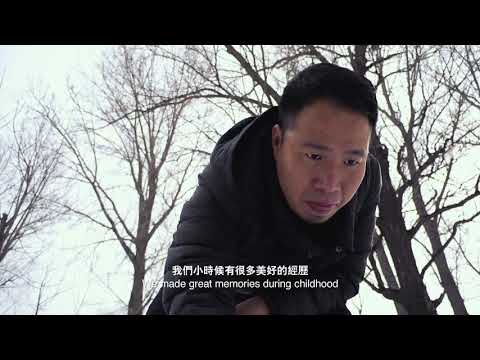
大師聯想 高孝午 Meet the Master Gao Xiaowu

藝時代|雕塑|高孝午 GAO XIAO WU 再生 Sculptures by Gao Xiao Wu

Gao Xiao Wu: A Journey of Artistic Renewal
Publications
Publications

Gao Xiaowu, 2009

Songs of Sculptors, 2009
Biography
Biography
Gao Xiao Wu was born in Sanming, Fujian province, 1976 and currently lives and works in Beijing, China. Gao enrolled in the sculpture department of Xiamen Art Academy, Fujian province before continuing his studies at the Central Academy Of Fine Arts, Beijing, graduating in 2004.
Gao's works are not only based on the lives of ordinary people living in the city, they also serve as an exploration of his own identity. Although he was born in the 1970's, his artistic creations resemble those born a decade later. He does not try to express ambitious aspirations that concern the country nor complain about the current situation. Instead, he is more concerned about happiness and grief in his everyday life. He is posturing for his own aesthetic view. Gao's aesthetics fall into the generation of comics and cartoons and he is one of the representative sculptors in these new trends. His creation avoids political symbols and totems. Gao, like other 1980s artists, spontaneously returned to the nature of artistic creation, pursuing his own aesthetic style by exploring different content and mediums.
http://vimeo.com/57117352
Standard Times series
The posture of Gao Xiao Wu's Standard Times sculptures is the first thing that strikes the viewer about Gao's sculptures. Gao's work is an expression of reverence that he sees as innately Asian, and in an act similar to a genuflect, the personification of respect is seen in the motion of bending forward. Often the erect form is the norm and yet in this work, the intention of the artist manifests through the choice of the posture of the figures. In a similar way, the smile to serves the purpose of demonstrating congenial attitudes. The viewer though is left to ponder if this is where the interpretation stops or if the works reflect a satire on the current social-political position of the Chinese. This is still left ambiguous, but whatever idea the viewer chooses to infer from the art, the result is that one is definitely moved by it. In 2008, Gao Xiao Wu's sculptures were acquired as the main piece for the newly-renovated DBS banking hall in Shenton Way (Singapore).
City Dreams series
Gao Xiao Wu's pieces are a reflection of modern Chinese society, and portray innately Asian behavioral norms and mental attitudes that coalesce to create a collective Asian identity. Where Gao Xiao Wu's Standard Times series is angular and appeals to a pleasure of visual symmetry as a set of three, his City Dreams series contains pieces that can be enjoyed both individually or collectively with a freer and more joyous form of expression through softer silhouettes. The roundness of the figures suggest content and existence in a state of complete bliss. Featuring a man in a tuxedo, a young executive in a tie and a boy of different dreams, it tells of how the pursuit of happiness occupies the mind of every city dweller; man or woman, regardless of age or social standing. Gao questions our notions of true happiness and suggests that our souls have to be enriched first before the physical body can achieve a whole sense of happiness. Gao's pieces can be interpreted in various ways, but one thing is for certain: his delightful pieces bring a smile to all their viewers. They depict city dwellers musing at city folk chasing their dreams.
Public Collections
Australia White Rabbit Art Foundation
DBS Bank (and the Shanghai Branch)
SGFH, Park Hyatt Hotel
Shanghai Bund 18
Sun-Jet Construction LTD
Parkview Group
Parkview Green
Carina Lau,
Yang Lan,
Sukping Chang
Goldman Invest Bank CEO
New York MOMA
Pricewaterhouse
Coopers
Piaget Asia Pacific President
Alfred Dunhill President
CapitaLand Singapore
Shanghai Hong Kong Plaza
The Arts and Design College,
Xiamen,
Fuzhou University National Quemoy University
Nanjing University of the Art Taipei Eclat Hotel
Shanghai K11
Hong Kong Parkview
Ji Mei University
Gao's works are not only based on the lives of ordinary people living in the city, they also serve as an exploration of his own identity. Although he was born in the 1970's, his artistic creations resemble those born a decade later. He does not try to express ambitious aspirations that concern the country nor complain about the current situation. Instead, he is more concerned about happiness and grief in his everyday life. He is posturing for his own aesthetic view. Gao's aesthetics fall into the generation of comics and cartoons and he is one of the representative sculptors in these new trends. His creation avoids political symbols and totems. Gao, like other 1980s artists, spontaneously returned to the nature of artistic creation, pursuing his own aesthetic style by exploring different content and mediums.
http://vimeo.com/57117352
Standard Times series
The posture of Gao Xiao Wu's Standard Times sculptures is the first thing that strikes the viewer about Gao's sculptures. Gao's work is an expression of reverence that he sees as innately Asian, and in an act similar to a genuflect, the personification of respect is seen in the motion of bending forward. Often the erect form is the norm and yet in this work, the intention of the artist manifests through the choice of the posture of the figures. In a similar way, the smile to serves the purpose of demonstrating congenial attitudes. The viewer though is left to ponder if this is where the interpretation stops or if the works reflect a satire on the current social-political position of the Chinese. This is still left ambiguous, but whatever idea the viewer chooses to infer from the art, the result is that one is definitely moved by it. In 2008, Gao Xiao Wu's sculptures were acquired as the main piece for the newly-renovated DBS banking hall in Shenton Way (Singapore).
City Dreams series
Gao Xiao Wu's pieces are a reflection of modern Chinese society, and portray innately Asian behavioral norms and mental attitudes that coalesce to create a collective Asian identity. Where Gao Xiao Wu's Standard Times series is angular and appeals to a pleasure of visual symmetry as a set of three, his City Dreams series contains pieces that can be enjoyed both individually or collectively with a freer and more joyous form of expression through softer silhouettes. The roundness of the figures suggest content and existence in a state of complete bliss. Featuring a man in a tuxedo, a young executive in a tie and a boy of different dreams, it tells of how the pursuit of happiness occupies the mind of every city dweller; man or woman, regardless of age or social standing. Gao questions our notions of true happiness and suggests that our souls have to be enriched first before the physical body can achieve a whole sense of happiness. Gao's pieces can be interpreted in various ways, but one thing is for certain: his delightful pieces bring a smile to all their viewers. They depict city dwellers musing at city folk chasing their dreams.
Public Collections
Australia White Rabbit Art Foundation
DBS Bank (and the Shanghai Branch)
SGFH, Park Hyatt Hotel
Shanghai Bund 18
Sun-Jet Construction LTD
Parkview Group
Parkview Green
Carina Lau,
Yang Lan,
Sukping Chang
Goldman Invest Bank CEO
New York MOMA
Pricewaterhouse
Coopers
Piaget Asia Pacific President
Alfred Dunhill President
CapitaLand Singapore
Shanghai Hong Kong Plaza
The Arts and Design College,
Xiamen,
Fuzhou University National Quemoy University
Nanjing University of the Art Taipei Eclat Hotel
Shanghai K11
Hong Kong Parkview
Ji Mei University
Exhibitions
Exhibitions
2013
Quest, Shanghai MOCA, Shanghai, China (solo)
2012
Retrospect and Reconstruction Chinese Contemporary Young Artists Exhibition, Beijing Micro-infiltration Art Exhibition, Beijing
Soft Violence Arts Exhibition, Beijing (solo)
Future Pass, Taiwan
Melbourne Art Fair, Melbourne
HuMEN’s Dream, Beijing
2011
China International Gallery Exhibition, Beijing
The 4th International Young Art Festival, Beijing
Young Art Taipei 2011 Exhibit, Taipei
La Biennale di Venezia - the Future Pass: From Asia to the World, Venice, Rotterdam
2010
Soft Violence, Beijing (solo) Expo Jing'An International Sculpture Project, Shanghai
Shanghai Art Fair Emerging Artists Exhibition, Shanghai
A Complex of the Sculpture Shows, Tianjin
Environmental Art Festival, Beijing
2009 - 2010 Animamix Biennial, Guangzhou
2009
Hong Kong Art Fair, Hong Kong Dance, Grand MOMA Sculpture Exhibition, Beijing
100 Tales in Animamix, Beijing
2008
Shanghai MOCA Envisage II - Butterfly Dream, ShanghaiThe First Annual Moon River Sculpture Festival –The Origin, Beijing
100 Tales in Animamix, Beijing
Art Basel Miami Beach, America
East Meets West: A Multi-Media Experience to Entice the Senses, Shanghai
Song Zhuang Art Festival, Beijing
"Surfing Animamix"Shanghai, Shanghai
The 2nd Asia Pacific Contemporary Art Fair, Shanghai
The 3rd Nanjing Triennial, Nanjing
Gao Xiaowu’s Sculpture Solo exhibition, Taiwan
2007
“Our Generation” Gao Xiaowu’s Sculpture Solo exhibition, Beijing"From Modernity to Eternity," the Second Cartoon Aesthetic Biennial, Shanghai
Floating New Generation of Art in China, Korea
798 Art Festival, Beijing
Festival International-Exit-“Animanga”, Paris, France
Special Exhibition in 798 Art Festival, Beijing 798
2006
Christmas is Approaching, Zendai Museum of Modern Art, Shanghai ‘Fiction@Love’ International Touring Exhibition
City Dream, Beijing (solo)
Chinese Art Today 2006 Exhibition, Beijing
Art Singapore 2006, Singapore
“Illusion City” Gao Xiaowu and “Tamen” Art Show, Beijing
The Dawn of Meaning, Beijing
2005
‘Era of Luxury’ China Contemporary Sculpture Exhibition, Tianjin SBM (Autumn) Art Show, Shanghai
Beijing International Art Biennale Satellite Exhibition, Beijing
Collision: Art and Performance, Shanghai
Sino-French Contemporary Art Exhibition, Beijing
The 1st China International Animated Art Festival, Hangzhou
2004
Gallery of China Art Academy Exhibition, Beijing Sculpture Movement, Jianwai SOHO, Beijing (solo)
Standard Age: Action of Sculpture, Jianwai SOHO, Beijing (solo)
Quest, Shanghai MOCA, Shanghai, China (solo)
2012
Retrospect and Reconstruction Chinese Contemporary Young Artists Exhibition, Beijing Micro-infiltration Art Exhibition, Beijing
Soft Violence Arts Exhibition, Beijing (solo)
Future Pass, Taiwan
Melbourne Art Fair, Melbourne
HuMEN’s Dream, Beijing
2011
China International Gallery Exhibition, Beijing
The 4th International Young Art Festival, Beijing
Young Art Taipei 2011 Exhibit, Taipei
La Biennale di Venezia - the Future Pass: From Asia to the World, Venice, Rotterdam
2010
Soft Violence, Beijing (solo) Expo Jing'An International Sculpture Project, Shanghai
Shanghai Art Fair Emerging Artists Exhibition, Shanghai
A Complex of the Sculpture Shows, Tianjin
Environmental Art Festival, Beijing
2009 - 2010 Animamix Biennial, Guangzhou
2009
Hong Kong Art Fair, Hong Kong Dance, Grand MOMA Sculpture Exhibition, Beijing
100 Tales in Animamix, Beijing
2008
Shanghai MOCA Envisage II - Butterfly Dream, ShanghaiThe First Annual Moon River Sculpture Festival –The Origin, Beijing
100 Tales in Animamix, Beijing
Art Basel Miami Beach, America
East Meets West: A Multi-Media Experience to Entice the Senses, Shanghai
Song Zhuang Art Festival, Beijing
"Surfing Animamix"Shanghai, Shanghai
The 2nd Asia Pacific Contemporary Art Fair, Shanghai
The 3rd Nanjing Triennial, Nanjing
Gao Xiaowu’s Sculpture Solo exhibition, Taiwan
2007
“Our Generation” Gao Xiaowu’s Sculpture Solo exhibition, Beijing"From Modernity to Eternity," the Second Cartoon Aesthetic Biennial, Shanghai
Floating New Generation of Art in China, Korea
798 Art Festival, Beijing
Festival International-Exit-“Animanga”, Paris, France
Special Exhibition in 798 Art Festival, Beijing 798
2006
Christmas is Approaching, Zendai Museum of Modern Art, Shanghai ‘Fiction@Love’ International Touring Exhibition
City Dream, Beijing (solo)
Chinese Art Today 2006 Exhibition, Beijing
Art Singapore 2006, Singapore
“Illusion City” Gao Xiaowu and “Tamen” Art Show, Beijing
The Dawn of Meaning, Beijing
2005
‘Era of Luxury’ China Contemporary Sculpture Exhibition, Tianjin SBM (Autumn) Art Show, Shanghai
Beijing International Art Biennale Satellite Exhibition, Beijing
Collision: Art and Performance, Shanghai
Sino-French Contemporary Art Exhibition, Beijing
The 1st China International Animated Art Festival, Hangzhou
2004
Gallery of China Art Academy Exhibition, Beijing Sculpture Movement, Jianwai SOHO, Beijing (solo)
Standard Age: Action of Sculpture, Jianwai SOHO, Beijing (solo)
Critique
Critique
Out of Essence - Gao Xiaowu's Pictorial Life
"Man's true essence is never changed by time and space; otherwise it is not essence. However, in different times or spaces, people always show characteristics of different ages or regions. Therefore, any surface phenomenon is temporary and blurry. I feel lucky to live here in the present. When I explore man's true essence, I see all kinds of lives at the moment. Mixed feelings well up in my heart. From my personal perspective, I seek the intrinsic connection of the meaning of life through different time and space, while pondering about the value of life. I am lucky because I can capture what I have seen, heard, thought and felt, by demonstrating my existence through art." - Gao Xiaowu
Gao Xiaowu was born in 1976 in Sanming, Fujian Province and graduated in 1999 from the Department of Sculpture at the Xiamen Academy of Arts and Crafts in Fujian. He then lived in the Xiamen Special Economic Zone for eight and a half years. Unlike other artists, he experienced early exposure to the rapid social transformation, impacts of economic development, disparity between the rich and the poor, and struggles amongst ordinary people. Such changes in the environment and the arduous struggle of life stimulated his observation of the surroundings. Hence, his inspiration for artistic creation is conveyed through inner emotion, pressure and rigidity.
Relocating to Beijing from Fujian was a turning point in Gao Xiaowu's artistic life. In 2004, he graduated from the Department of Sculpture at the Central Academy of Fine Arts and gradually developed a unique style. Back in his hometown, Gao was engaged in the creation of public sculptures and other multimedia sculptures, which helped him develop his skills and technique. He became famous in Beijing for his Standard Times series, which illustrated that he saw life through rose-colored spectacles. Unlike all the other artists who came to Beijing from other places and struggled to survive, Gao was set apart due to his kindness in helping others, humility and self-awareness. There is a tenacious power and ambitious force within his heart that gives him the support in facing the difficulties that surround him. His distinctive sense of humor is not only revealed in the expression on his face, but also throughout his artwork.
His masterpiece, Standard Times, depicts the greeting posture of ingratiation of white-collar employees who are smiling at each other, smiling from ear to ear. It is a sketch created for the people around him. Standard Times is what he considers the "Computer Age" nowadays. Man has experienced the standardized production process of the Industrial Revolution and has now entered a digital age of the microelectronics revolution. Man's thinking has also been formatted. The more developed and modernized a society is, the more restriction it will face due to "standardization": from the standardization of products in the Industrial Revolution to the standardization of human behaviour in the microelectronics revolution. The idea of standardization is spread universally. Even the seemingly noble class of white-collar workers cannot escape the standardization of human behavior. They must also demonstrate standard service behaviour with a servile or obsequious bow and smile. Gao believes that the root cause is the overwhelming restriction present about 'acceptable' behaviour that triggers the pressure in human beings today.
His figurative statues illustrate the standard posture and smile, which constitutes his standardized pictorial symbols and facial expressions. It is his pictorial language that affects the hearts of the common people during rapid economic development in China.
The City Dreams series attempts to break through the constraints of standardized behavior, in which the body of a pipsqueak expands into a big balloon with a pair of small wings and expressing the standardized smile that is distinctive in Gao's art. He dreams that he can fly high in the sky like an angel. However, in reality, his clumsy body is unwieldy and his little swings can't support his weight. This represents the helplessness of those living in the metropolitan area, who never give up their dreams even if they conflict with reality. Gao writes: "Everyone is born naive and romantic. There is nothing more beautiful in the world than this. Men created civilizations and cities. Meanwhile, we are distancing ourselves from our most beautiful human nature. The dream I had in my childhood when I was in the countryside, was of the city. Then the dream I had dreamt while I was in the city, was of the countryside. I am busy and tired that I live in the real world."
From Standard Times to City Dreams to Our Generation, these series of artworks are not only based on the lives of ordinary people living in the city, but also serve as an exploration of his own identity. Although he was born in the 1970s, his artistic creations resemble those who were born in the 1980s. He does not try to express ambitious aspirations that concern the country nor complains about the current situation. Instead, he is more concerned about the happiness and grief in his own everyday life. He is posturing for his own aesthetic view. Our Generation reflects those who were born in the 1980s who were portrayed as being naïve. It plays with symbolic gestures in a way that makes them feel cool and it goes beyond gender and race. In Gao's words: "We are the blog-generation. By speaking several languages, taking various postures, displaying different types of identities and in assorted manners, we are able to develop numerous talents, play international jokes, dream of countless cities, and use the universal slangs "OK! Hello! Bye-bye! Thank you! No!"
Our Generation seems to show Gao's late adolescence. He is liberated from the constrained mood of self-mockery, and simply interprets the desire for communication when boys are in the throes of their first love. It is humorous, relaxing and uncritical. In his 2007 series Fell Asleep, he disclosed the reason why his creation changed: Gao Xiaowu fell in love! He couldn't help laughing out happily, and eventually he married his heroine in the Fell Asleep series. The sleeping position is a metaphor for being able to go beyond the real world, to a pure state without disturbance from worldly pursuits. The Fell Asleep series is a betrothal gift for his dear wife Liu Xiaoying.
Gao's aesthetics fall into the generation of comics and cartoons. He is one of the representative sculptors in the new trend of Animamix Aethetics that the author has been working on. His creations avoid political symbols or totems. Gao and other artists from the 1980s generation have spontaneously returned to the nature of artistic creation, pursuing their own aesthetic style and expressing interest in content and medium. The international aesthetics they exhibit are different from the generation of Political Pop, which emphasizes Chinese styles through political motifs. Most artists of the new generation, including Gao Xiaowu, are narcissistic. Influenced by their environment, they change their creations frequently and invent pictorial symbols for themselves and not for the nation or politics. Gao goes beyond his own pictorial symbols from the early Gao-type smile generated by the exaggerated and ordinary people to the most recently released sleeping couple. Aside from creating the essence of the figures, he also records his love story openly by creating sculptures.
From the essence of art, we can distinguish "the love of life" from Gao Xiaowu's artworks. Having such talent in expression, enables him to make better art.
Victoria Lu
Interpreting Gao Xiaowu's Sculptural Art
Gao Xiaowu leaves me with the impression that he is perpetually smiling. He has been embraced very often by his fellow people, based on the Chinese notion that "one's face tells one's heart." His sculptural works are stylish and humorous in an exaggerated manner, with warm smiling faces classically embedded in his work.
Comedy is unveiled through white-collar workers standing in Beijing's Jianwai SoHo, bowing with a wide smile in his series "The Standard Times." Gao Xiaowu enters the spotlight with his expression and contemporary creativity, which has been widely accepted and recognized by the art circle.
The work "The Standard Times" is a physical representation of the worldwide infiltration of standardized services with the onset of globalization. These services are costly and evoke mixed feelings from an audience who view his works; although the people depicted through the sculptures are laughing, there is an inherent sense of helplessness.
"City Dream" depicts chubby, smiling angels which are liked by many viewers. The image of a round body invoke images of inflating desires, such as how commercial advertisements float through the air, while consumers indulge in helpless and uncontrolled desires for the material. The gigantic bodies which are heavy in weight express an eagerness to fly with their tiny wings, creating a clash between the material and spirit, ideals and reality; in an attempt to showcase the subversive paranoia by his ironic and humorous expressions. It gives a flavor of cynicism.
If we are to say that the works "Post Standard Times" and "City Dreams" are signifiers of Gao Xiaowu's "inward emotions," these actually stemmed from his earlier creations in school, which then evolved into contemplations on society. His later works "Our Generation" and "Fell Asleep" signify his transition in expression into a "mood of youth" with contemplation of a generation of future fashion, cartoons and animation. The style of cartoons and animation aim to inspire and revive the imagination of the audience by throwing away the spiritual remains of contemporary art left in history and targeting the future. The conceptual metaphor and cartoon images embedded in Gao's work have a strong message and are full of characters one can find in this era of time. Details of time emerge from his work's surfaces, defining historical waste with ironic and joyful humor in an era full of a sense of collectivism.
In "Our Generation," the artist uses the body language of youths rather than an exaggerated expression to highlight the dilemma of contemporary languages, brought up by one's own cultural roots and globalization under the governance of western discourse power. He intends to evoke a rethinking of the role of education his generation has received. In "Fell Asleep", the richly colored images were depicted with a tinge of paranoia, showcasing the detailing of different situations of people from a great variety of social classes, i.e., the image of one's head surrounded by lots of meaningless saliva out of his or her mouth, constructing colourful clouds in a floating and dreamy way. Is it creative? Or addressing the future? Or an avoidance of the present situation? The work "Fell Asleep" is a new mirror to depict childlike China.
Gao Xiaowu was born in Datian, Fujian Province of China. Honesty and purity are two characteristics often found, due to his cultural and geographical background. The characteristics of nature and honesty are popular in his hometown, and noise and restlessness in an urban life is portrayed in contrast. Gao Xiaowu has tried always to retain a balance between the two. One can tell from the title "Our Generation" that Gao Xiaowu possesses a sense of self-identification which is different from those artists born in the 1960s or '70s. The artists born in those periods of time often felt unsure about their own identity, and one can find a sense of "angry youth" in them. The artist instead focuses on the aesthetic needs and feelings of the new-generation artists born in the 1980s; his work reveals this rational thinking. Thus, the unique style the artist has developed through his work is mild but not classical, showy but not cheesy. As contemporary art is renowned for its radical and critical nature, the fun shown through Gao's work has allowed our viewers to experience art by "swimming in the games of art" in a contemporary sense.
Hong Shunzhang
"Man's true essence is never changed by time and space; otherwise it is not essence. However, in different times or spaces, people always show characteristics of different ages or regions. Therefore, any surface phenomenon is temporary and blurry. I feel lucky to live here in the present. When I explore man's true essence, I see all kinds of lives at the moment. Mixed feelings well up in my heart. From my personal perspective, I seek the intrinsic connection of the meaning of life through different time and space, while pondering about the value of life. I am lucky because I can capture what I have seen, heard, thought and felt, by demonstrating my existence through art." - Gao Xiaowu
Gao Xiaowu was born in 1976 in Sanming, Fujian Province and graduated in 1999 from the Department of Sculpture at the Xiamen Academy of Arts and Crafts in Fujian. He then lived in the Xiamen Special Economic Zone for eight and a half years. Unlike other artists, he experienced early exposure to the rapid social transformation, impacts of economic development, disparity between the rich and the poor, and struggles amongst ordinary people. Such changes in the environment and the arduous struggle of life stimulated his observation of the surroundings. Hence, his inspiration for artistic creation is conveyed through inner emotion, pressure and rigidity.
Relocating to Beijing from Fujian was a turning point in Gao Xiaowu's artistic life. In 2004, he graduated from the Department of Sculpture at the Central Academy of Fine Arts and gradually developed a unique style. Back in his hometown, Gao was engaged in the creation of public sculptures and other multimedia sculptures, which helped him develop his skills and technique. He became famous in Beijing for his Standard Times series, which illustrated that he saw life through rose-colored spectacles. Unlike all the other artists who came to Beijing from other places and struggled to survive, Gao was set apart due to his kindness in helping others, humility and self-awareness. There is a tenacious power and ambitious force within his heart that gives him the support in facing the difficulties that surround him. His distinctive sense of humor is not only revealed in the expression on his face, but also throughout his artwork.
His masterpiece, Standard Times, depicts the greeting posture of ingratiation of white-collar employees who are smiling at each other, smiling from ear to ear. It is a sketch created for the people around him. Standard Times is what he considers the "Computer Age" nowadays. Man has experienced the standardized production process of the Industrial Revolution and has now entered a digital age of the microelectronics revolution. Man's thinking has also been formatted. The more developed and modernized a society is, the more restriction it will face due to "standardization": from the standardization of products in the Industrial Revolution to the standardization of human behaviour in the microelectronics revolution. The idea of standardization is spread universally. Even the seemingly noble class of white-collar workers cannot escape the standardization of human behavior. They must also demonstrate standard service behaviour with a servile or obsequious bow and smile. Gao believes that the root cause is the overwhelming restriction present about 'acceptable' behaviour that triggers the pressure in human beings today.
His figurative statues illustrate the standard posture and smile, which constitutes his standardized pictorial symbols and facial expressions. It is his pictorial language that affects the hearts of the common people during rapid economic development in China.
The City Dreams series attempts to break through the constraints of standardized behavior, in which the body of a pipsqueak expands into a big balloon with a pair of small wings and expressing the standardized smile that is distinctive in Gao's art. He dreams that he can fly high in the sky like an angel. However, in reality, his clumsy body is unwieldy and his little swings can't support his weight. This represents the helplessness of those living in the metropolitan area, who never give up their dreams even if they conflict with reality. Gao writes: "Everyone is born naive and romantic. There is nothing more beautiful in the world than this. Men created civilizations and cities. Meanwhile, we are distancing ourselves from our most beautiful human nature. The dream I had in my childhood when I was in the countryside, was of the city. Then the dream I had dreamt while I was in the city, was of the countryside. I am busy and tired that I live in the real world."
From Standard Times to City Dreams to Our Generation, these series of artworks are not only based on the lives of ordinary people living in the city, but also serve as an exploration of his own identity. Although he was born in the 1970s, his artistic creations resemble those who were born in the 1980s. He does not try to express ambitious aspirations that concern the country nor complains about the current situation. Instead, he is more concerned about the happiness and grief in his own everyday life. He is posturing for his own aesthetic view. Our Generation reflects those who were born in the 1980s who were portrayed as being naïve. It plays with symbolic gestures in a way that makes them feel cool and it goes beyond gender and race. In Gao's words: "We are the blog-generation. By speaking several languages, taking various postures, displaying different types of identities and in assorted manners, we are able to develop numerous talents, play international jokes, dream of countless cities, and use the universal slangs "OK! Hello! Bye-bye! Thank you! No!"
Our Generation seems to show Gao's late adolescence. He is liberated from the constrained mood of self-mockery, and simply interprets the desire for communication when boys are in the throes of their first love. It is humorous, relaxing and uncritical. In his 2007 series Fell Asleep, he disclosed the reason why his creation changed: Gao Xiaowu fell in love! He couldn't help laughing out happily, and eventually he married his heroine in the Fell Asleep series. The sleeping position is a metaphor for being able to go beyond the real world, to a pure state without disturbance from worldly pursuits. The Fell Asleep series is a betrothal gift for his dear wife Liu Xiaoying.
Gao's aesthetics fall into the generation of comics and cartoons. He is one of the representative sculptors in the new trend of Animamix Aethetics that the author has been working on. His creations avoid political symbols or totems. Gao and other artists from the 1980s generation have spontaneously returned to the nature of artistic creation, pursuing their own aesthetic style and expressing interest in content and medium. The international aesthetics they exhibit are different from the generation of Political Pop, which emphasizes Chinese styles through political motifs. Most artists of the new generation, including Gao Xiaowu, are narcissistic. Influenced by their environment, they change their creations frequently and invent pictorial symbols for themselves and not for the nation or politics. Gao goes beyond his own pictorial symbols from the early Gao-type smile generated by the exaggerated and ordinary people to the most recently released sleeping couple. Aside from creating the essence of the figures, he also records his love story openly by creating sculptures.
From the essence of art, we can distinguish "the love of life" from Gao Xiaowu's artworks. Having such talent in expression, enables him to make better art.
Victoria Lu
Interpreting Gao Xiaowu's Sculptural Art
Gao Xiaowu leaves me with the impression that he is perpetually smiling. He has been embraced very often by his fellow people, based on the Chinese notion that "one's face tells one's heart." His sculptural works are stylish and humorous in an exaggerated manner, with warm smiling faces classically embedded in his work.
Comedy is unveiled through white-collar workers standing in Beijing's Jianwai SoHo, bowing with a wide smile in his series "The Standard Times." Gao Xiaowu enters the spotlight with his expression and contemporary creativity, which has been widely accepted and recognized by the art circle.
The work "The Standard Times" is a physical representation of the worldwide infiltration of standardized services with the onset of globalization. These services are costly and evoke mixed feelings from an audience who view his works; although the people depicted through the sculptures are laughing, there is an inherent sense of helplessness.
"City Dream" depicts chubby, smiling angels which are liked by many viewers. The image of a round body invoke images of inflating desires, such as how commercial advertisements float through the air, while consumers indulge in helpless and uncontrolled desires for the material. The gigantic bodies which are heavy in weight express an eagerness to fly with their tiny wings, creating a clash between the material and spirit, ideals and reality; in an attempt to showcase the subversive paranoia by his ironic and humorous expressions. It gives a flavor of cynicism.
If we are to say that the works "Post Standard Times" and "City Dreams" are signifiers of Gao Xiaowu's "inward emotions," these actually stemmed from his earlier creations in school, which then evolved into contemplations on society. His later works "Our Generation" and "Fell Asleep" signify his transition in expression into a "mood of youth" with contemplation of a generation of future fashion, cartoons and animation. The style of cartoons and animation aim to inspire and revive the imagination of the audience by throwing away the spiritual remains of contemporary art left in history and targeting the future. The conceptual metaphor and cartoon images embedded in Gao's work have a strong message and are full of characters one can find in this era of time. Details of time emerge from his work's surfaces, defining historical waste with ironic and joyful humor in an era full of a sense of collectivism.
In "Our Generation," the artist uses the body language of youths rather than an exaggerated expression to highlight the dilemma of contemporary languages, brought up by one's own cultural roots and globalization under the governance of western discourse power. He intends to evoke a rethinking of the role of education his generation has received. In "Fell Asleep", the richly colored images were depicted with a tinge of paranoia, showcasing the detailing of different situations of people from a great variety of social classes, i.e., the image of one's head surrounded by lots of meaningless saliva out of his or her mouth, constructing colourful clouds in a floating and dreamy way. Is it creative? Or addressing the future? Or an avoidance of the present situation? The work "Fell Asleep" is a new mirror to depict childlike China.
Gao Xiaowu was born in Datian, Fujian Province of China. Honesty and purity are two characteristics often found, due to his cultural and geographical background. The characteristics of nature and honesty are popular in his hometown, and noise and restlessness in an urban life is portrayed in contrast. Gao Xiaowu has tried always to retain a balance between the two. One can tell from the title "Our Generation" that Gao Xiaowu possesses a sense of self-identification which is different from those artists born in the 1960s or '70s. The artists born in those periods of time often felt unsure about their own identity, and one can find a sense of "angry youth" in them. The artist instead focuses on the aesthetic needs and feelings of the new-generation artists born in the 1980s; his work reveals this rational thinking. Thus, the unique style the artist has developed through his work is mild but not classical, showy but not cheesy. As contemporary art is renowned for its radical and critical nature, the fun shown through Gao's work has allowed our viewers to experience art by "swimming in the games of art" in a contemporary sense.
Hong Shunzhang


Stay connected.
Sign up to our newsletter for updates on new arrivals and exhibitions